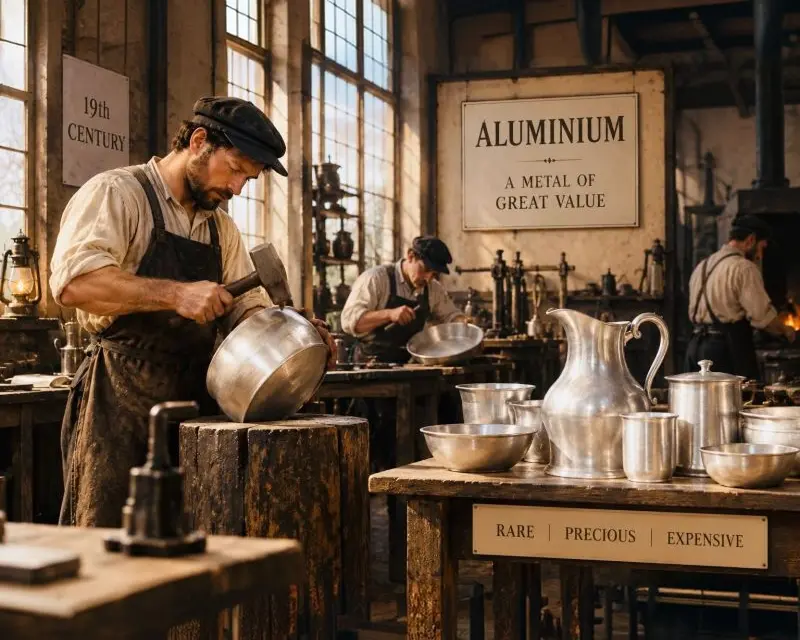

Today, aluminium is everywhere from beverage cans and aircraft to buildings and everyday household products. But in the 19th century, this familiar metal was once considered a precious material, valued at times more highly than gold.
The reason was not scarcity. Aluminium is abundant in the Earth’s crust, but extracting the metal from its ores was extremely difficult and expensive. In the year 1855, at the Paris Exhibition, an aluminium bar held pride of place alongside the Crown Jewels, while Napoleon III reportedly reserved aluminium tableware for his most distinguished guests.
Everything changed in 1886, when Charles Martin Hall and Paul Héroult independently developed the Hall-Héroult process for producing aluminium. The fascinating part is: Gold was expensive because it was genuinely scarce. Aluminium was expensive because our technology was scarce. And sometimes, what we call “value” is simply the price of not yet knowing how to unlock abundance.
What was once a luxury metal could finally become a material for mass use.