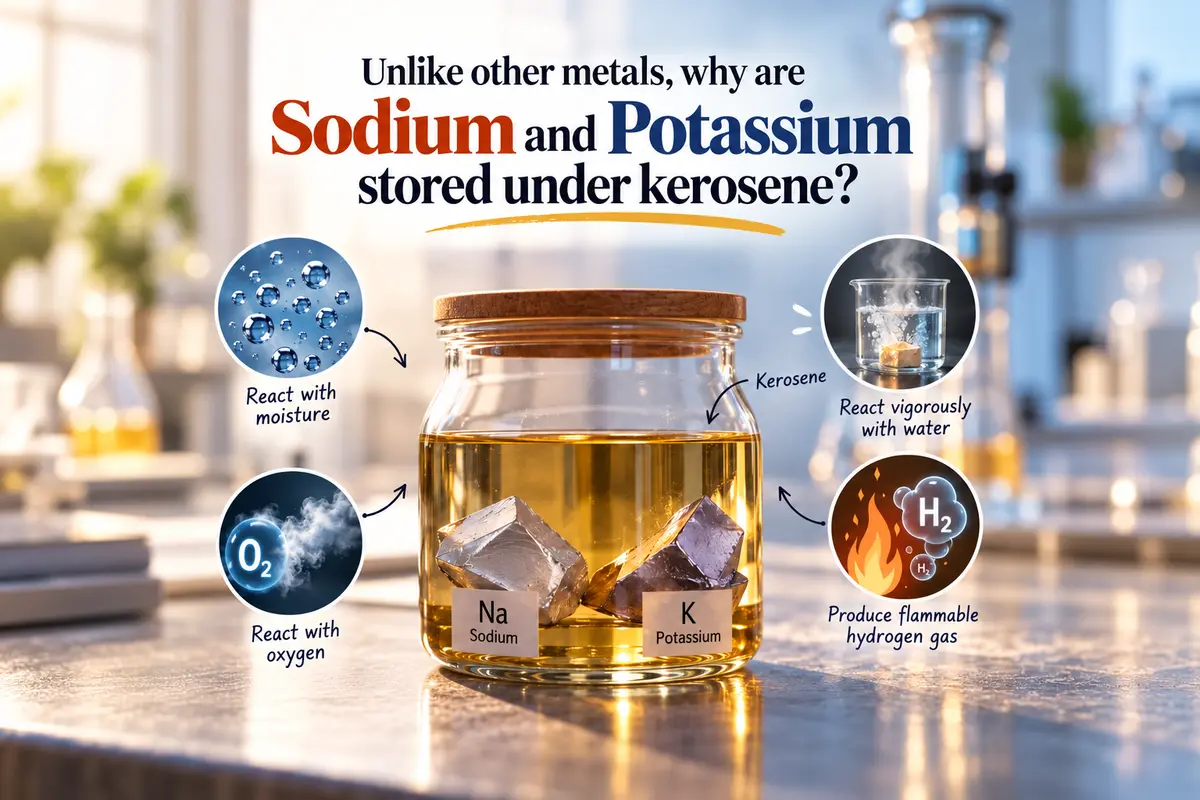

Imagine finding a metal that cannot simply be left sitting on a laboratory shelf. Instead, it is carefully kept under a layer of kerosene. It may sound unusual, but this is exactly how highly reactive metals such as sodium and potassium are stored.
Both are highly reactive alkali metals that readily react with moisture and oxygen. Sodium, for example, oxidises rapidly when freshly cut and is stored under paraffin.
They can also react vigorously with water, producing heat and flammable hydrogen gas. A layer of kerosene or liquid paraffin keeps the metals isolated from air and moisture, helping prevent these reactions.
So, the kerosene is not part of the chemistry, it is a protective barrier that keeps these highly reactive metals safely away from their surroundings.