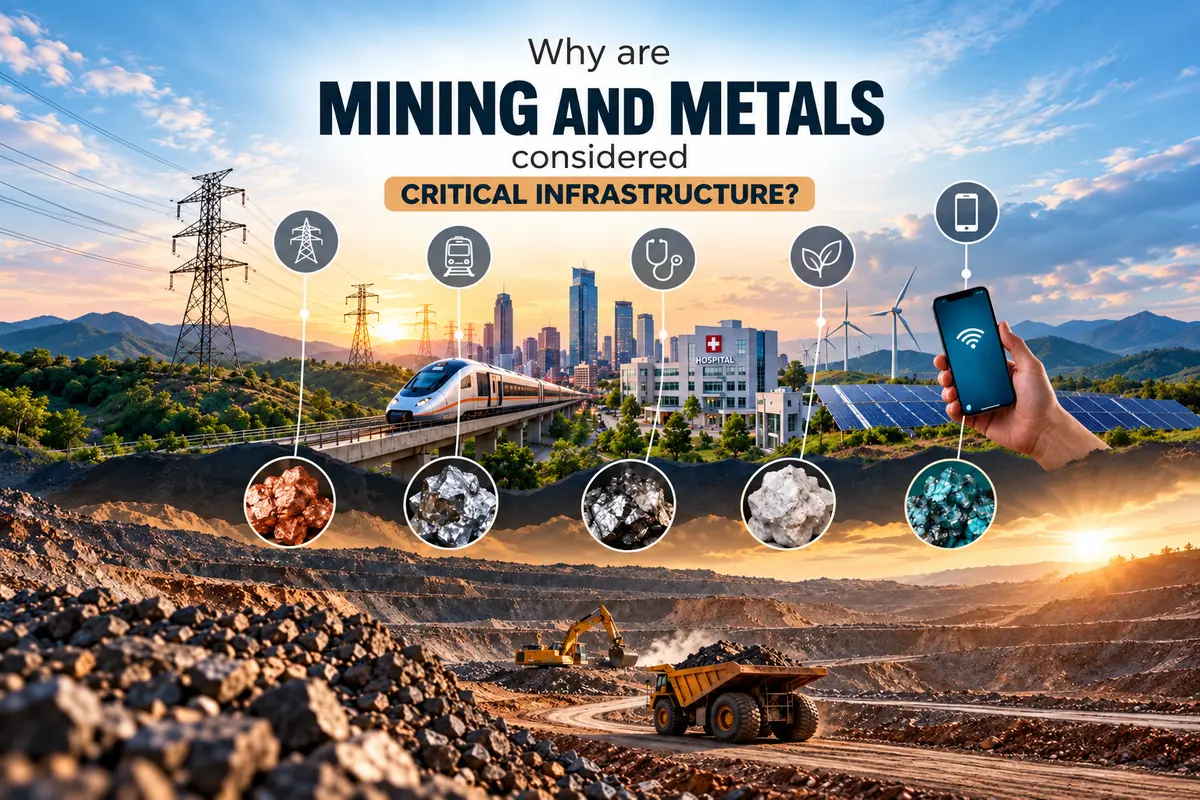

Think about everything around you that keeps modern life moving, a power line carrying electricity, a train crossing a city, a hospital using advanced equipment or a smartphone connecting you to the world. What they have in common is something we rarely see: minerals and metals are hidden behind much of the infrastructure we depend on every day.
Copper and aluminium, for example, are essential to power transmission, while lithium, nickel, cobalt and other critical minerals support batteries, renewable energy technologies and advanced manufacturing. According to the IEA, modern economies are increasingly moving towards electrified, digitalised and automated systems, and the industries that underpin this transformation are mineral-intensive.
This makes reliable mineral supply more than an economic concern. Disruptions can affect energy security, manufacturing, technology and national resilience. The USGS defines critical minerals partly by their importance to economic or national security and their vulnerability to supply disruption.
Mining and metals are therefore not simply industries that extract resources, they provide the foundations on which essential infrastructure and modern economies depend.