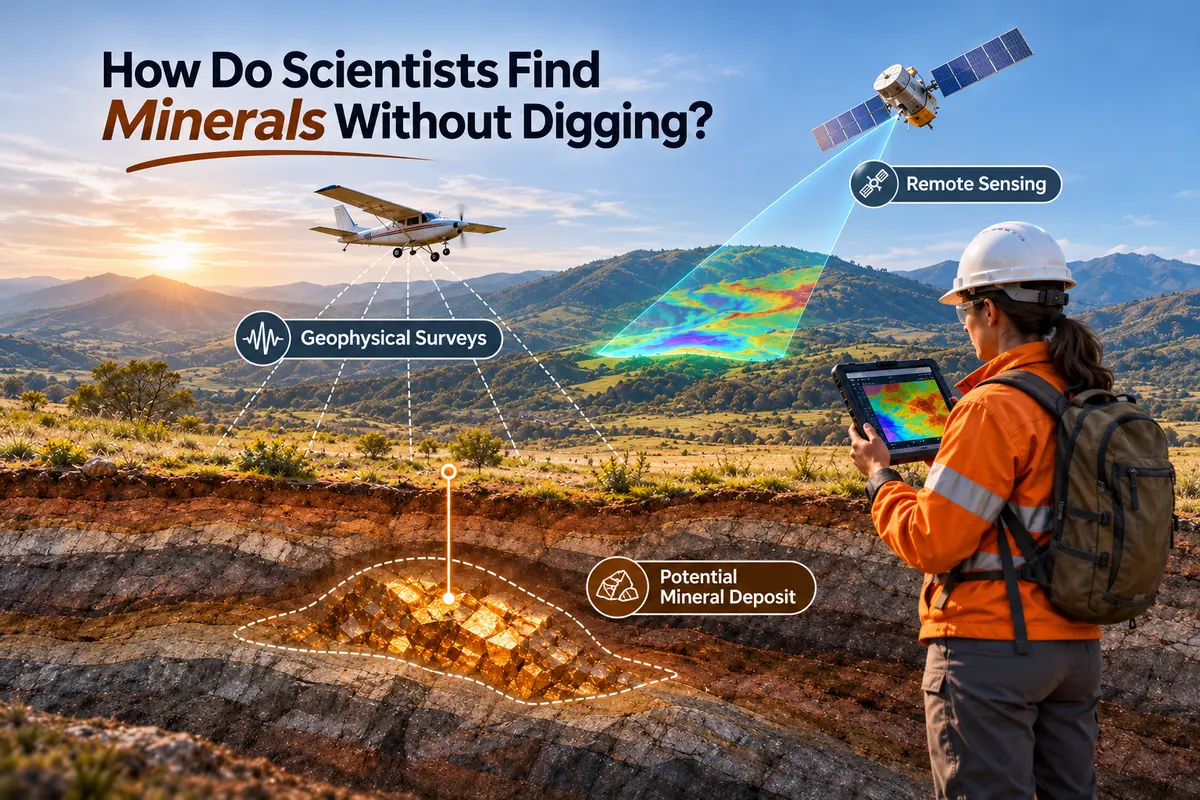

Imagine searching for valuable minerals buried deep beneath layers of solid rock. Reaching them may require miners to travel hundreds of metres below the Earth's surface. But why not simply dig an open pit?
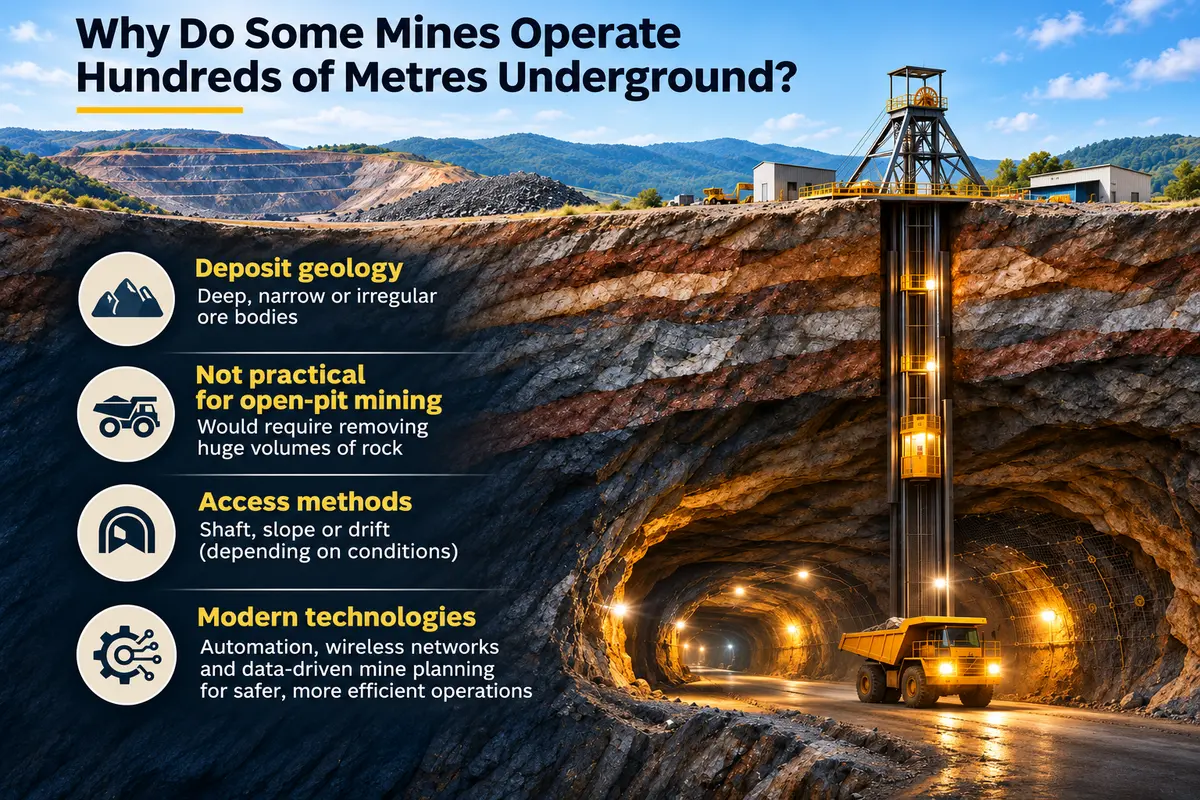
The answer lies in the geology of the deposit. Some mineral deposits occur deep underground, while others are narrow, steeply dipping or irregularly shaped. Extracting these through open-pit mining could require removing enormous quantities of overlying rock, making the operation economically impractical.
When extracting a deposit from the surface is no longer practical, underground mining becomes the alternative. However, this approach comes with its own challenges and costs. Building tunnels and shafts, maintaining ventilation and ensuring worker safety require substantial investment. Despite these expenses, underground mining remains essential for accessing valuable mineral resources located deep beneath the surface.
Access to underground deposits is typically gained through shaft, slope, or drift methods, each suited for different geological conditions. Common mining techniques include room and pillar, stope and pillar, and longwall mining, each characterized by unique approaches to mineral extraction and support systems.
Modern underground mining has increasingly incorporated automation to improve safety, efficiency, and productivity. Emerging technologies, including wireless communication networks, autonomous haulage, and data-driven mine planning continue to push underground mining toward greater automation.