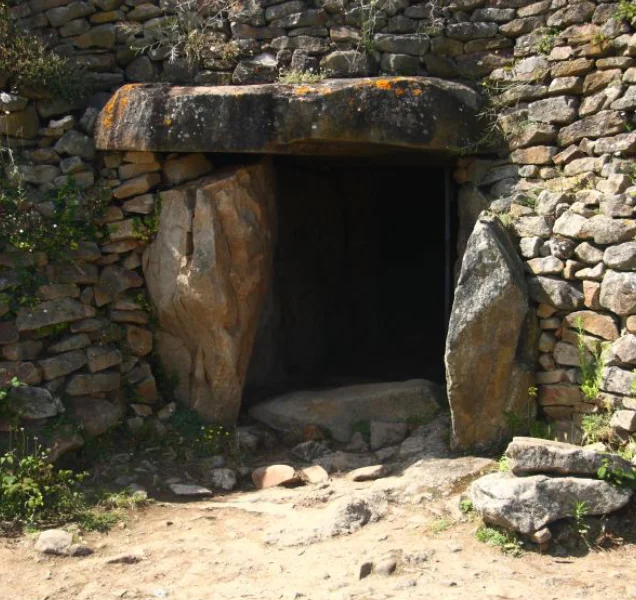
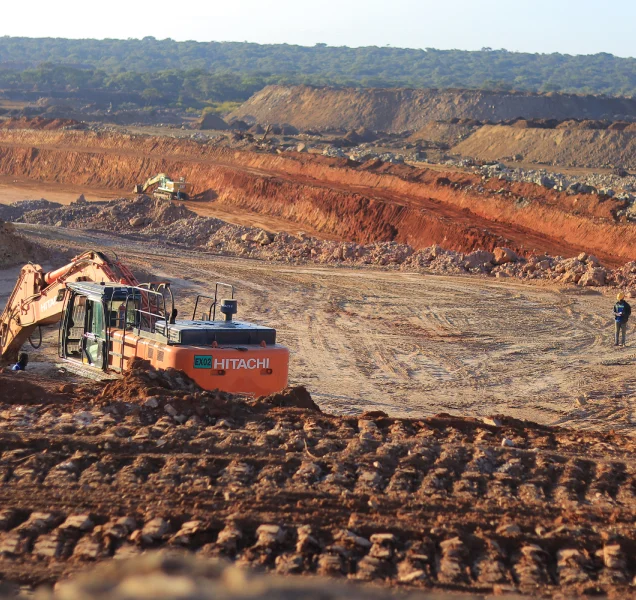
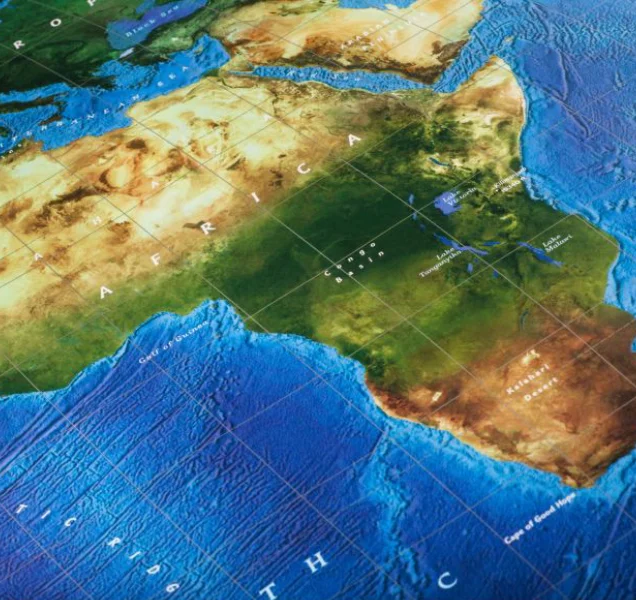
It is well evident that hashtagmining is older than hashtagcivilization and as per records, the oldest known mine in the world is in the Ngwenya Mine in Eswatini, hashtagSouthAfrica (formerly Swaziland), specially the “Lion Cavern” site. Archaeological findings indicate that this mine was used for the extraction of red hematite and speculariteus, used to produce ochre pigment, around 43,000 to 48,000 years ago during the Middle Stone Age.
hashtagArchaeological research shows that early humans were mining resources in prehistoric times. For example, during the Neolithic Period or New Stone Age (about 8000 – 2000 BCE), people sank shafts up to 100 m deep in chalk deposits in France and Britain to extract flint, which was used for tools like scrapers and arrowheads, essentially one of the earliest forms of mining known. Other minerals such as red ochre and copper ores were also collected and used as pigments or for tool making long before formal states developed.
Later, mining became more sophisticated: ancient Egyptians were mining copper on the Sinai Peninsula as early as 3000 BCE, and metals like gold, silver, and lead were exploited in early Bronze Age societies. While organised city-states and civilizations such as those in Mesopotamia and Egypt developed systems of governance, writing, and agriculture, the act of mining extracting useful materials from the Earth predates these developments by many millennia.
Viewed through a historical lens, mining began in pre-civilised hunter-gatherer and early agrarian societies, well before the advent of structured, urban civilisation, indicating mining is indeed older than civilisation itself.